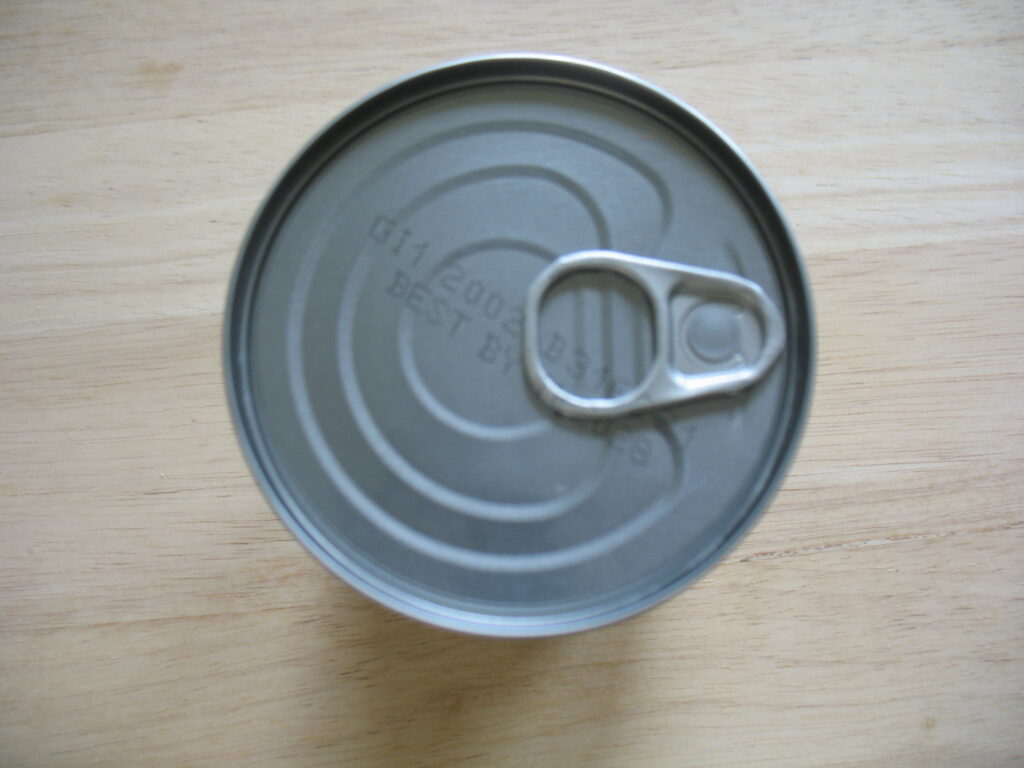
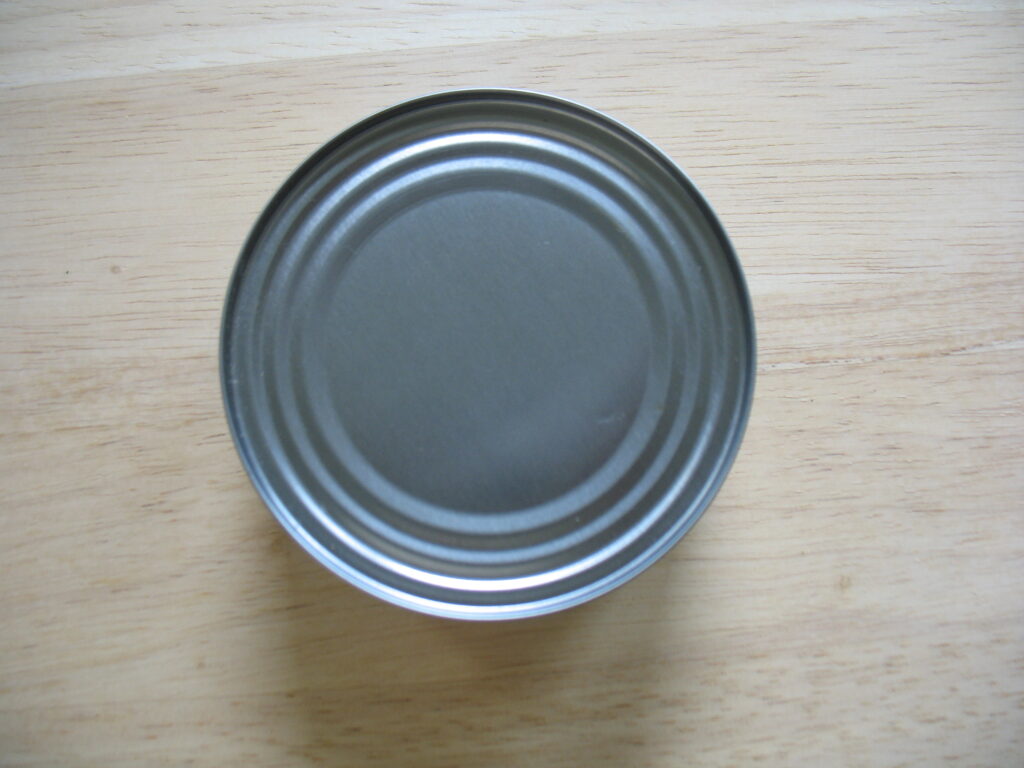
1. Avoid Bulging Cans Top or Bottom
This is a sign that harmful bacteria such as botulism have entered the product and can cause illnesses. The top of the can should be concave , curved inward, not outward as in above photographs.
2. Avoid Dented Cans
Particularly cans with large dents, dents on the seams or “dents that make it impossible to open with a manual can opener”. A dented can, can have a tiny pin hole invisible to the eye but allows penetration by bacteria.
3. Avoid Rusted Cans
Rust can hide pin holes through which harmful bacteria can enter and contaminate the contents, or simply indicate that the product is very old.
4. “Always select cans and packages that appear to be new”
Dusty cans and torn labels can indicate old stock.”
5. Check Seals and Safety Buttons
Lids on jars should be tightly sealed; A broken seal is an entry point for harmful bacteria that is invisible to the naked eye.
6. Discard leaky cans
Leaky cans have holes that are accessible to harmful Organisms.
Ionie Ponde, MS, RD, LDN
B Food Savvy 
References:
- U.S. Department of Agriculture (USDA) Food Safety and Inspection Service (FSIS). https://www.fsis.usda.gov/food-safety/safe-food-handling-and-preparation/food-safety-basics/shelf-stable-food
- Joe Kivett and Dr. Mark Tamplin with Dr. Gerald J. Kivett, The food Safety Book.
- Food Service Sanitation, 4th Edition, John Wiley & Sons Inc. in cooperation with the Educational Foundation of the National Restaurant Association.