
When you walk into a fine dining restaurant the array of plates on the table can look intimidating, but each plate has a role. If you are hosting the dinner at home, understanding the types of plates and when they’re used can enhance the service, presentation and flow. Below, is break down of the most commonly used plate types, and their function.
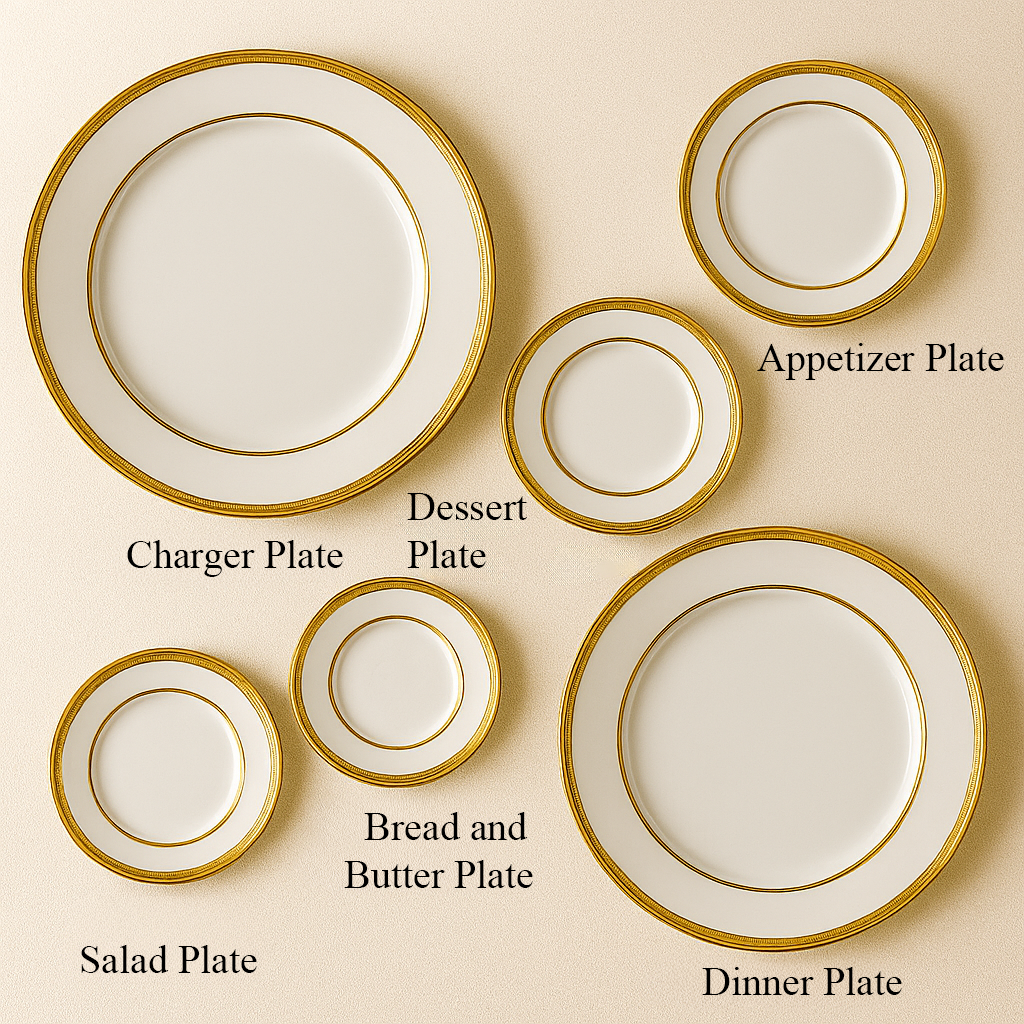
- Service Plate Also Called Charger plate/cover plate and more
Purpose:
A service plate is a large decorative plate placed under the dinner plate or subsequent courses.
It serves as a base or “placeholder” and catches spills or drips from courses served above it.
It is not used for food directly, except sometimes for the very first courses, depending on service style.
Typically, the service plate stays until just before the main course or sometimes until dessert, at which point it is removed.
Details & Usage:
Service plates are larger in diameter than dinner plates (often 11–14 inches) to accommodate layering.
They add visual weight and formality to a place setting.
Because they can be decorative, they often feature patterns, metallic rims, or contrasting textures.
In more casual settings, service plates may be omitted.
2. Dinner Plate
Purpose:
This is the primary plate used for serving the main course.
It must be large enough to hold the entrée plus its accompaniments; vegetables, starches, sauces, without overcrowding.
Details & Usage:
Standard diameters often range from 10 to 12 inches though styles and design trends may push those sizes slightly larger or smaller.
Dinner plates are usually placed on top of the service plate if used, or directly on the tablecloth/placemat in simpler settings.
After the main course is consumed, the dinner plate is usually removed.
3. Appetizer Plate
Purpose:
Used for the appetizer, before the main course.
Details & Usage:
Ranges in size from 4 to 7 inches depending on the appetizer to be served. The larger size is interchangeable with the salad plate and can be used for either course, eliminating the need to purchase two different sizes.
4. Salad Plate
Purpose:
Used for salad but can also serve as an appetizer plate.
Details & Usage:
Slightly smaller in diameter than the dinner plate to allow space for layering.
In some formal services, the salad plate may be brought in only when needed (i.e. “service à la russe” style).
Depending on the type of service or preference, the salad plate can be stacked on top of the dinner plate or placed to the left of it.
5. Dessert Plate
Purpose:
Used for the sweet end of the meal; dessert, pastries, cakes, fruit courses, etc.
Details & Usage:
Typically, smaller than dinner or salad plates average 7 ½ inches but can be larger or smaller based on the dessert to be served.
Sometimes the dessert plate is brought in only when the table is cleared.
It could come with a matching spoon or fork laid horizontally at the top of the setting before the meal begins and may or may not match the dinner set.
6. Bread & Butter Plate
Purpose:
A small plate placed upper left side of the main setting for bread, rolls, and a butter
It helps keep crumbs off the main table surface and isolates bread items.
Details & Usage:
Usually about 6–7 inches in diameter.
The butter knife may rest across or on the edge of the plate.
Plates are more than mere vessels. They are integral to the choreography of a meal. The right plate type, and timing can enhance presentation, protect the table, and support the flow of service. Whether you are a guest at a fancy restaurant or planning a formal or informal dinner at home, knowing which plate does what and why helps to make the dining experience enjoyable.
Ionie Ponde, MS, RD, LDN
B Food Savvy