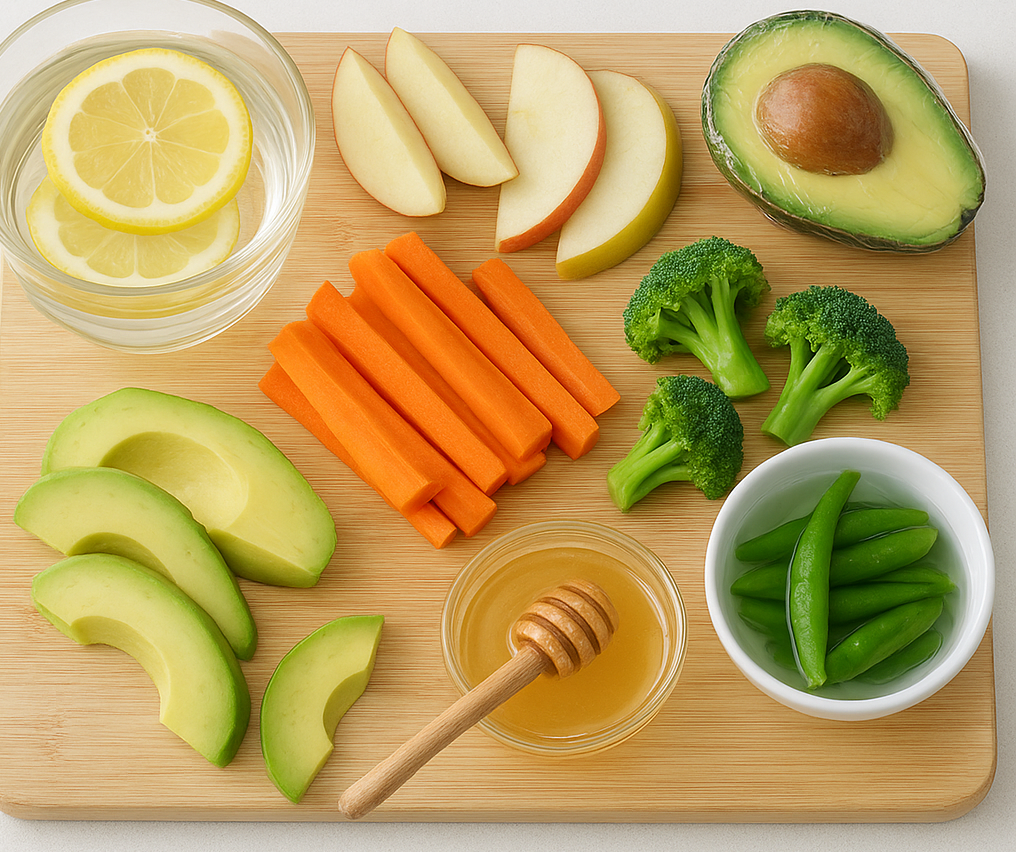
Like flowers, fruits and vegetables are naturally rich in color and beautiful to look at, however, some lose their vibrant color during food preparation and become dull and unappetizing, causing us at times to lose out on the wide array of nutrients and health benefits they offer.
This discoloration occurs when:
Some fruits and vegetables such as apples, bananas, avocado, pears, potato etc., are cut and oxygen in the air reacts with the enzymes in these foods to set off chemical reactions that result in the brown discoloration.
Other vegetables, like, broccoli, green beans, and leafy greens, lose their bright color due to prolonged exposure to heat, air, or soaking.
Though not harmful this change in color, lowers their attractiveness and make us less eager to consume them.
This discoloration could be prevented with a few simple techniques that employs substances to counter the actions of oxygen and or inhibits browning.
Below are a list of the best techniques to prevent or delay browning
1. Use a solution of Water and Edible Acid such as Lemon, Lime, or Vinegar.
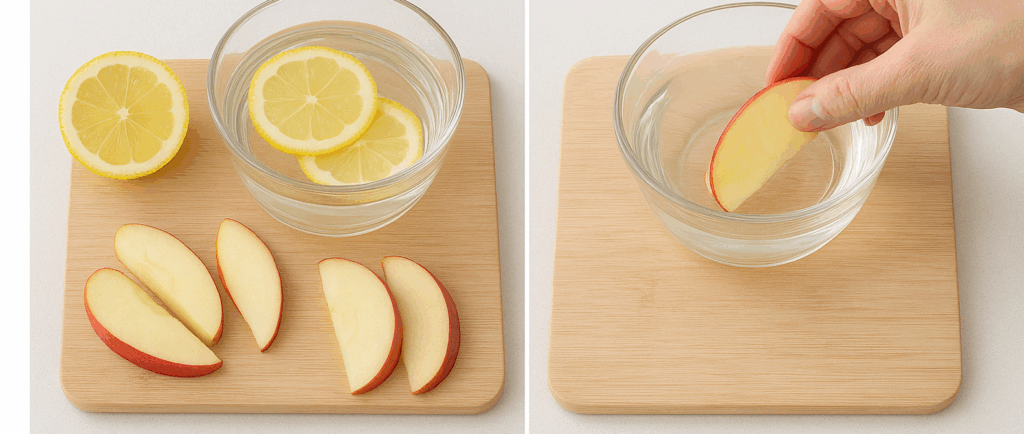
Acidic water is one of the most effective and easiest ways to prevent browning.
How to do it:
Add 1–2 tablespoons of lemon juice, lime juice, or white vinegar per 1 cup of cold water.
Submerge cut fruits or vegetables.
Drain and pat dry before serving or cooking.
Great for: Apples, pears, avocados, bananas, potatoes.
Tip: If you don’t want a strong citrus taste, use a very light ratio—just enough acidity to prevent browning.
2. Coat with Fruit juices
The natural acidity in fruit juices slows oxidation while adding a fresh flavor.
Best choices:
- Orange juice
- Pineapple juice
Great for: Fruit platters and salads with apples, bananas, peaches, or pears.
Bonus: These juices works beautifully because it contains ascorbic acid (Vitamin C), a powerful antioxidant.
3. Honey Water Dip
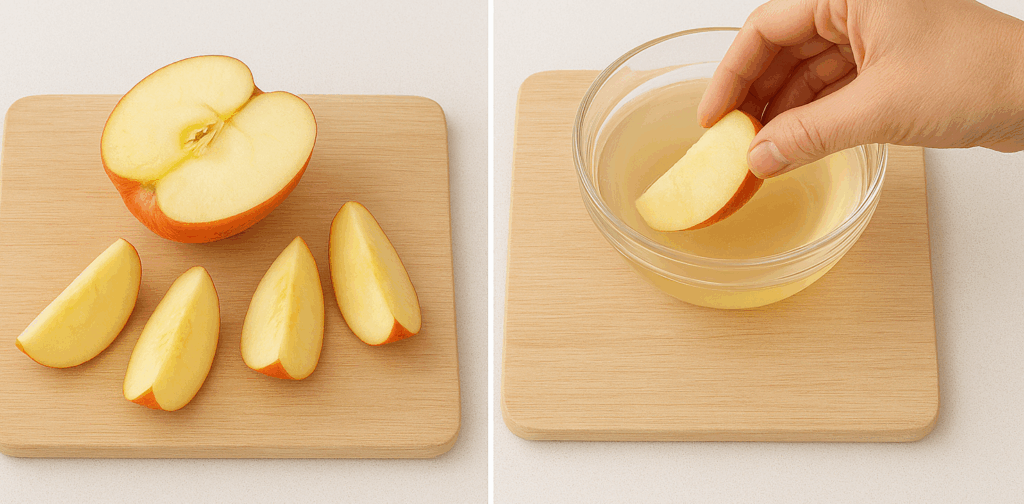
Honey contains a peptide that naturally slows oxidation.
How to do it:
- Mix 2 tablespoons of honey with 1 cup of water.
- Dip fruit for 30 seconds.
Great for: Apples, pears, and avocados.
4. Use a Very Mild Solution of Salt Water
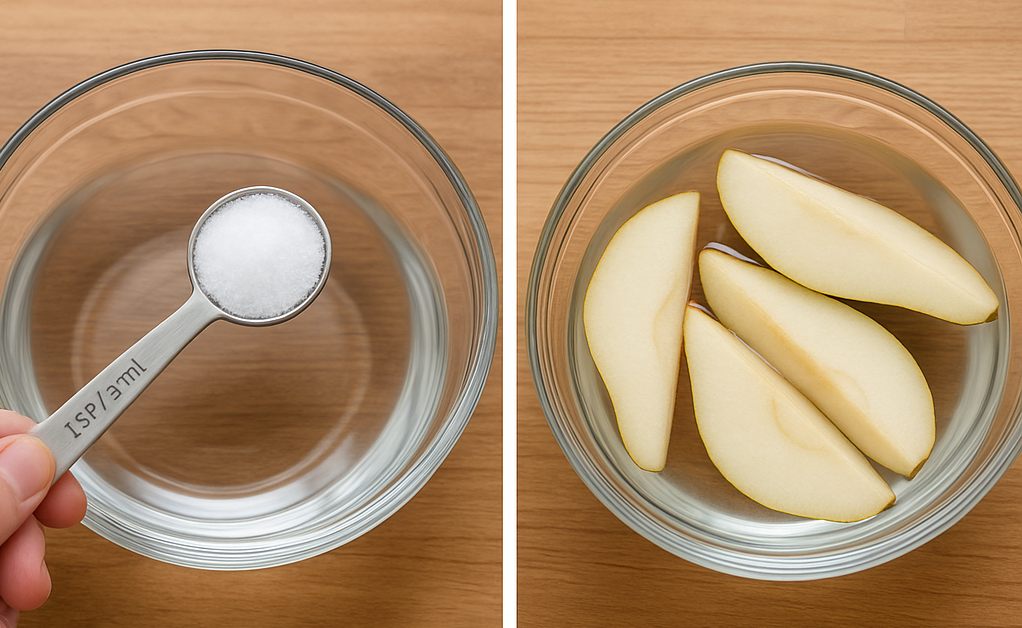
A quick dip in saltwater can help prevent browning without altering the taste when done correctly.
How to do it:
- Mix ½ teaspoon of salt with 4 cups of cold water.
- Soak fruit for 3–5 minutes.
- Rinse lightly before serving.
Great for: Apples and potatoes.
5. Blanch and Shock for Bright Green Vegetables
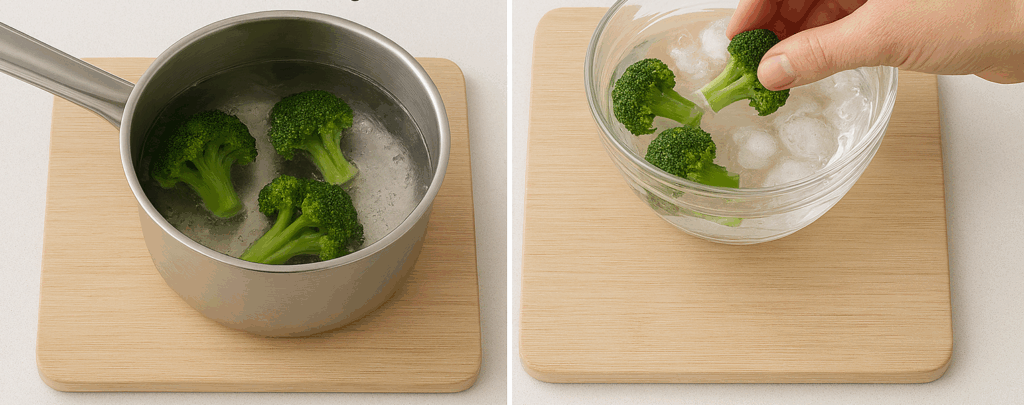
Blanching helps preserve color, flavor, and texture.
How it works:
- Boil a pot of water.
- Add vegetables and cook for 30 seconds to 2 minutes.
- Immediately transfer them into ice water.
Blanching neutralizes the enzymes that cause discoloration and dullness.
Great for: Broccoli, green beans, snap peas, asparagus, carrots.
6. Keep Cut Produce Covered and Cold
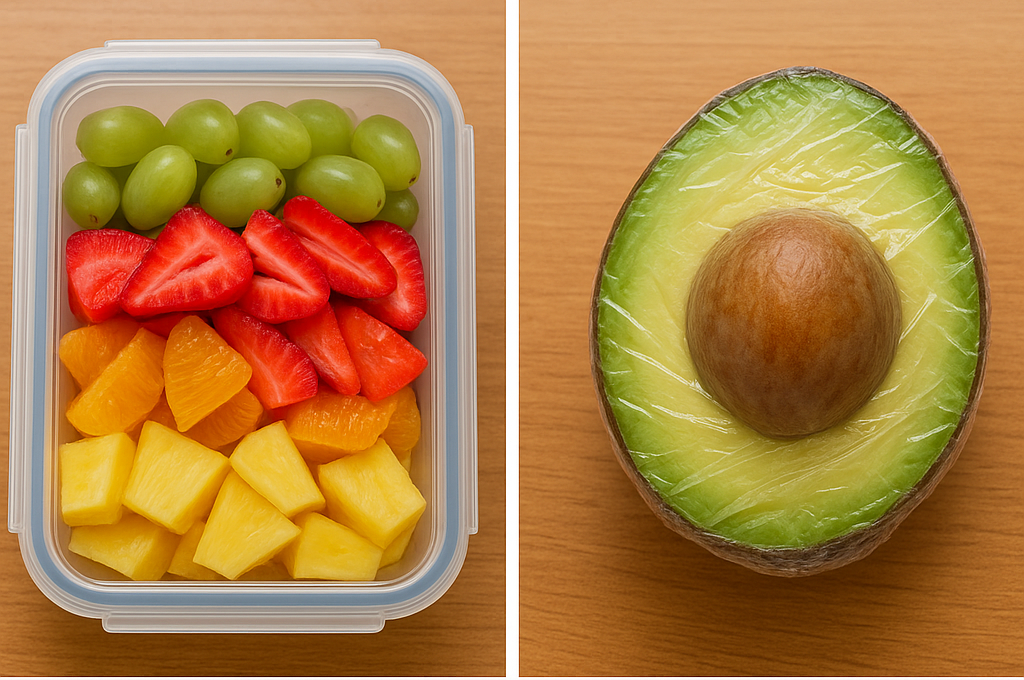
Limiting air exposure slows the browning process dramatically.
Methods:
- Store cut items in an airtight container.
- Press plastic wrap directly onto the surface of items like guacamole, avocado halves, or apples.
- Refrigerate promptly—cold temperatures slow enzymatic activity.
7. Use Anti-Browning Commercial Solutions
In professional kitchens and catering, anti-browning powders or sprays made with ascorbic acid are commonly used.
These work well for:
- Fruit trays
- Prepped potatoes
- Salads made hours ahead
Look for products labeled fruit preservers or vitamin C powder.
8. . Keep the Peel On When Possible
Peels act as natural protection. If presentation allows, cutting right before serving or leaving part of the skin on helps maintain vibrancy longer.
These simple techniques with ingredients you already have in your kitchen such as lemons, salt, honey etc. make the fruits and vegetables you serve, more appealing. Greater appeal leads to greater consumption and greater health benefits from the vast array of nutrients and plant chemicals.
Ionie Ponde, MS, RD, LDN
B Food Savvy 