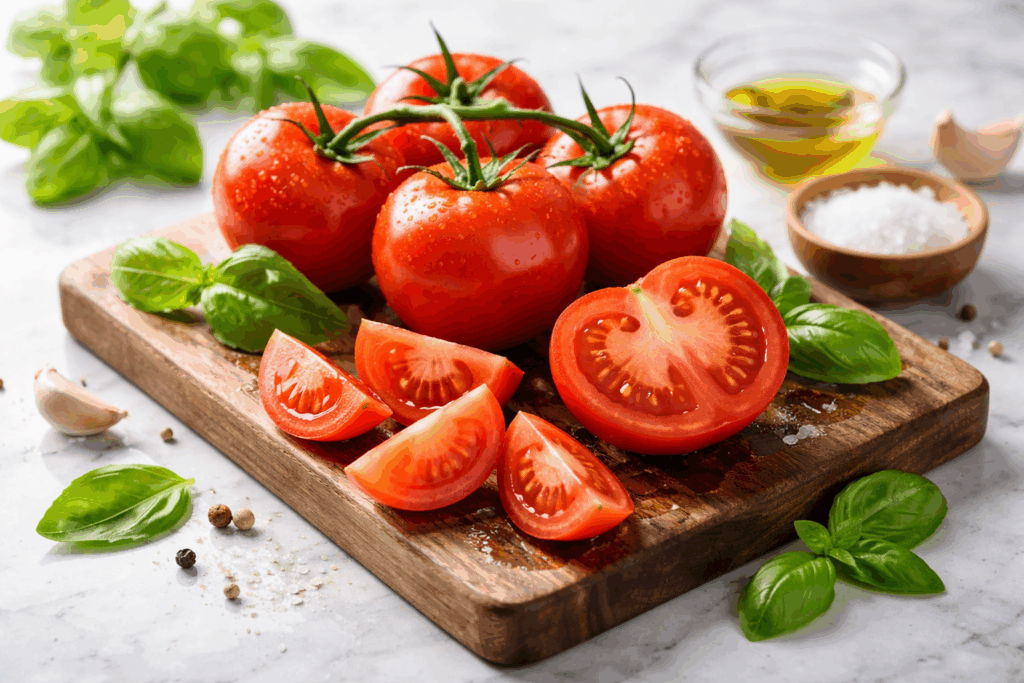
Tomatoes are one of the most popular ingredients in kitchens around the world. From fresh salsa to hearty pasta sauces, their bright color and juicy flavor make them incredibly versatile. But beyond taste, tomatoes offer powerful health benefits and some people wonder whether they should avoid them because tomatoes belong to the nightshade family.
Let’s explore both the benefits and the concerns so you can make an informed choice.
Nutritional Benefits of Tomatoes
Tomatoes are low in calories and loaded with beneficial vitamins, antioxidants, and plant compounds.
Top Nutrients Found in Tomatoes
- Vitamin C – powerful antioxidant for immune health
- Potassium – helps maintain healthy blood pressure
- Vitamin A + beta-carotene – supports eye and skin health
- Vitamin K – supports blood clotting and bone health
- Lycopene – antioxidant linked to heart and cancer protection
Key Health Benefits
1. Heart Health Support
Tomatoes contain lycopene and potassium, which research links to:
- improved cholesterol levels
- reduced oxidation of LDL (“bad cholesterol”)
- better blood vessel function
These benefits together may lower heart disease risk.
2. Anti-Inflammatory & Antioxidant Effects
Tomato antioxidants, especially lycopene help neutralize free radicals that contribute to inflammation and cellular aging.
3. Help Protect Against Certain Cancers
Studies suggest a link between tomato/lycopene intake and reduced risk of:
- prostate cancer
- lung cancer
- stomach cancer
While no single food prevents disease, tomatoes can support long-term health when part of a balanced diet.
4. Supports Eye & Skin Health
Vitamin C in tomatoes stimulates collagen production, while beta-carotene and lycopene may help protect cells in the retina and skin from UV damage.
Are Tomatoes Bad Because They’re a Nightshade?
Tomatoes belong to the nightshade family, which also includes potatoes, peppers, and eggplants. Some people claim nightshades cause inflammation, arthritis, or digestive reactions.
Where the Concern Comes From
Nightshades contain alkaloids, natural compounds that act as plant defense chemicals. Some believe that these cause inflammation in susceptible people.
Scientific Perspective
Research has not shown nightshades to worsen inflammation in the general population. Most people tolerate tomatoes without any negative effects. In fact, tomatoes’ high levels of antioxidants have been shown to decrease inflammation in clinical studies.
Who Might Want to Be Cautious?
A small number of individuals may experience reactions due to:
- Tomato allergies/intolerance
- Severe acid reflux (due to acidity)
- Autoimmune elimination diets (temporary sensitivity exploration)
If someone notices a personal reaction to tomatoes, working with a healthcare provider to evaluate is recommended.
Bottom Line
Tomatoes are nutritious, delicious, and backed by science as a beneficial addition to most diets. While concerns exist because tomatoes are nightshades, there is no strong evidence that tomatoes cause inflammation or harm in healthy individuals.
Enjoy them roasted, fresh, sauced, or sun-dried — and savor both the flavor and the wellness benefits.
Ionie Ponde, MS, RD, LDN
B Food Savvy 
References
- US Department of Agriculture, Food Data Central, https://fdc.nal.usda.gov/food-details/2346404/nutrients
- Dietary Supplement Fact Sheets, National Institute of Health, Office of Dietary supplements, https://ods.od.nih.gov/factsheets/list-all/
- Britt M Burton-Freeman, Howard D Sesso, September 1st, 2014, Whole Food versus Supplement: Comparing the Clinical Evidence of Tomato Intake and Lycopene Supplementation on Cardiovascular Risk Factors1,2, ADV Nutr, PMCID: PMC4188219 PMID: 25469376
- Wilhelm Stahl, Ulrike Heinrich, Olivier Aust, Hagen Tronnier & Helmut Sies, February 1st, 2006, Licopene-Rich Products and Dietary Photoprotection, Photochem Photobiol Sci 5, 238–242 (2006). DOI https://doi.org/10.1039/b505312a
- Sylwia Przybylska and Grzegorz Tokarczyk, 10th February 2022, Lycopene in the Prevention of Cardiovascular Diseases, Int. J. Mol. Sci. 2022, 23(4), 1957; https://doi.org/10.3390/ijms23041957
- Usman Mir Khan, Mustafa Sevindik, Ali Zarrabi, Mohammad Nami, Betul Ozdemir, Dilara Nur Kaplan, Zeliha Selamoglu, Muzaffar Hasan, Manoj Kumar, Mohammed M. Alshehri, Javad Sharifi-Rad, November 19th, 2021, Lycopene: Food Sources, Biological Activities, and Human Health Benefits, Open Access, https://doi.org/10.1155/2021/2713511
- Diet, Food & Fitness/Nutrition, July 1st, 2025, The Truth About Nightshade: Are They Bad for You? Cleveland clinic Health Essentials, https://health.clevelandclinic.org/whats-the-deal-with-nightshade-vegetables?utm_source=chatgpt.com
- What You Should Know About Nightshades and Arthritis, Arthritis Foundation, https://www.arthritis.org/health-wellness/healthy-living/nutrition/anti-inflammatory/how-nightshades-affect-arthritis
- HealthCert Education, April 10th, 2024, Medical nutrition & nightshades: A look at the evidence, https://www.healthcert.com/blog/medical-nutrition-and-nightshades
- Rebecca Kuang , David J Levinthal, Amir A Ghaffari , Claudia Ramos Del Aguila de Rivers , Aylin Tansel , David G Binion , July 2023, Nightshade Vegetables: A Dietary Trigger for Worsening Inflammatory Bowel Disease and Irritable Bowel Syndrome? Dig Dis Sci, MID: 37202602 DOI: 10.1007/s10620-023-07955-9