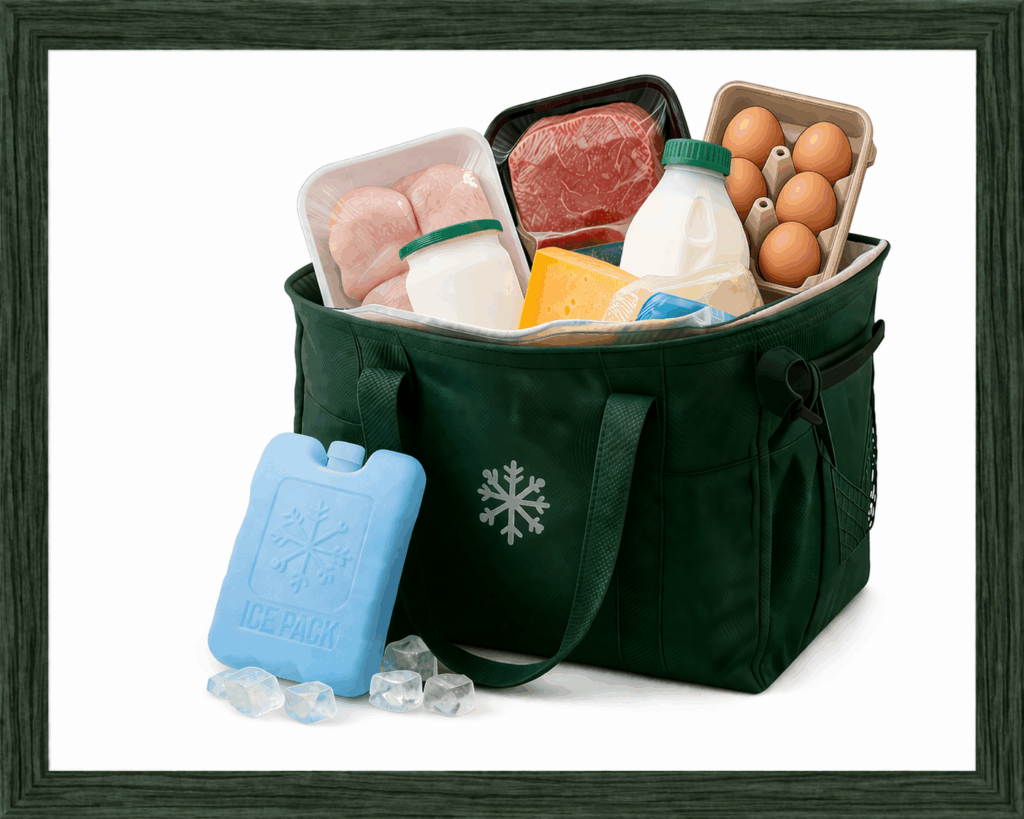
According to the US Government in an article entitled “4 Steps to Food Safety”, food poisoning sends approximately 128,000 Americans to the hospital each year. When shopping for refrigerated foods you can do your part to help keep these numbers down and protect your family by taking steps to keep refrigerated foods safe. Cold foods should be kept at 40 degrees Fahrenheit or below to keep harmful bacteria from multiplying to dangerous levels and not allowed to sit above this temperature for more than 2 hours.
Frozen foods should be kept at 0 degrees Fahrenheit or below. This can be challenging when grocery shopping. Below are a few tips to help you keep your cold food safe during shopping and transport.
1. If you are running multiple errands on the same day, make your grocery shopping the last trip of the day so that you are not driving around for hours with foods that should be kept cold, especially on hot summer days.
2. In the store, pick up the refrigerated and frozen items especially meat, fish and dairy products last, just before going to check out to reduce the amount of time, they are kept at temperatures above the required temperature range.
3. Select frozen foods that are solidly frozen and in good condition, no damaged, leaky package or signs of thawing. Make sure refrigerated foods are cold to the touch.
4. Check for expiration dates and choose items that are furthest from their “Sell By”, “Use By”,“ or “Best Before” date that give you more time.
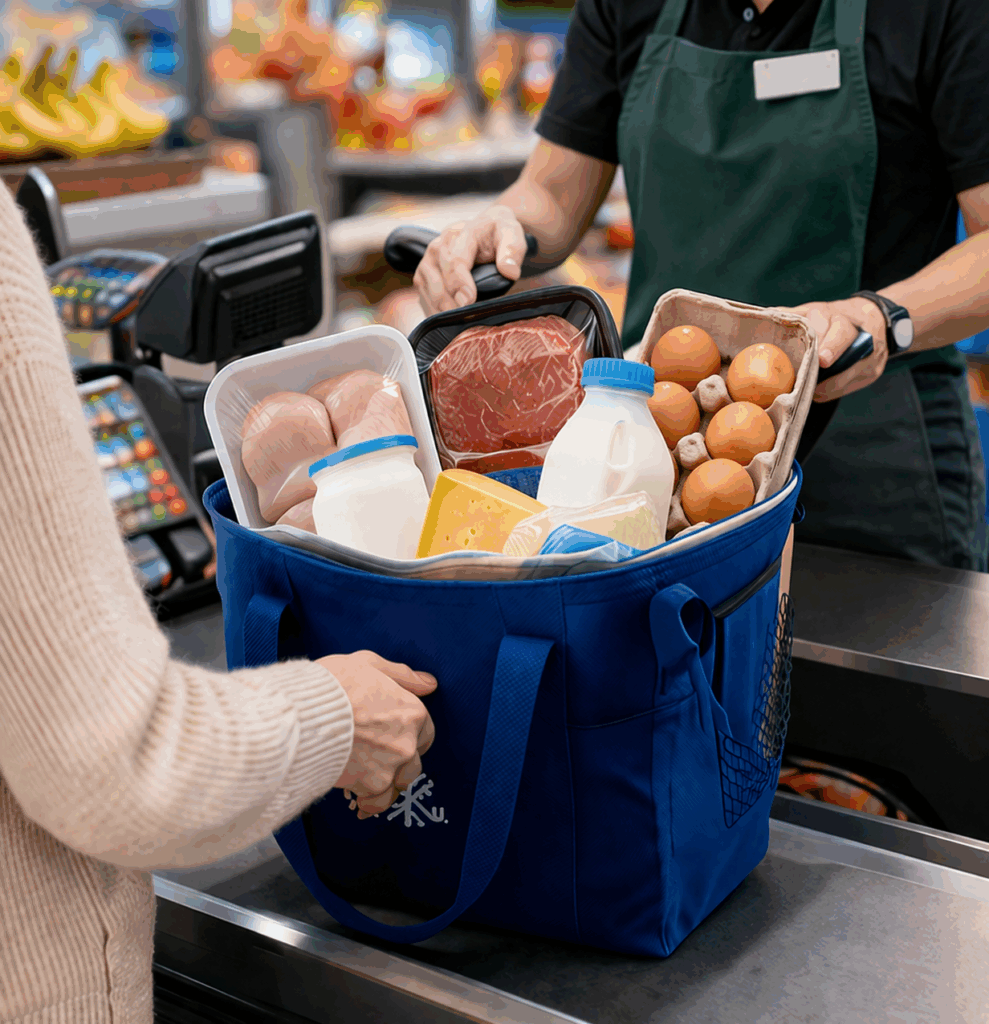
5. At checkout bag cold and frozen food together to help them stay cold longer, bagging them with foods at room temperature will cause them to warm up sooner.
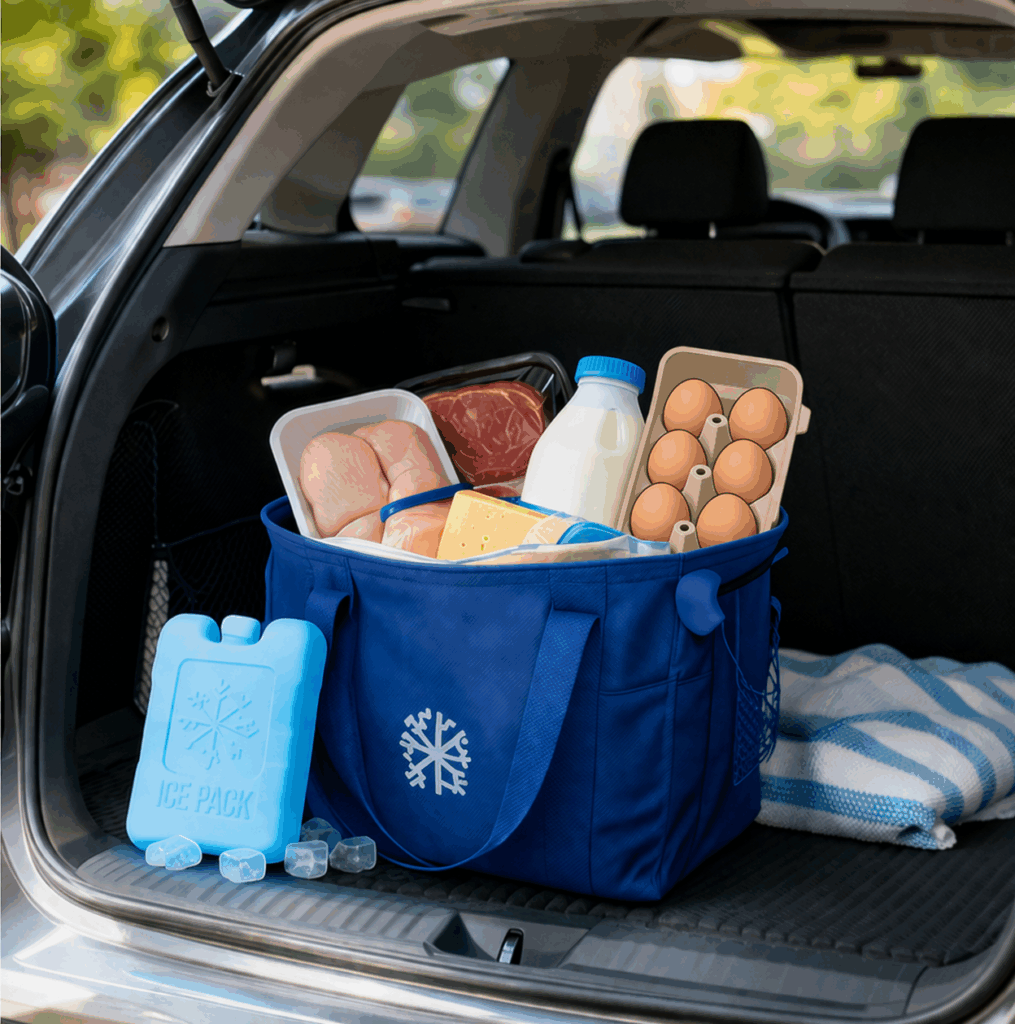
6. Make sure that cold items stay as cold as possible on the ride home, by placing them in the coldest part of the car, which is the trunk of the car during the winter and the back seat of the car with the air condition running during the summer.
A note of caution: While focusing on the safety of cold foods, make sure that your raw meat, poultry and seafood are not themselves contaminating other purchased foods. Make sure they are securely wrapped and or placed in a plastic bag separate from other foods in your grocery cart and at check out, to prevent contact. The juices from raw meat, poultry and seafood can spread harmful bacteria and other organisms to other purchased foods especially ready to eat foods, causing illness.
Ionie Ponde, MS, RD, LDN
B Food Savvy 
References
- Four Steps to Food Safety, foodsafety.gov, https://www.foodsafety.gov/keep-food-safe/4-steps-to-food-safety
- Sara Elnakib, Chair, Department of Family and community Health Sciences, Don Schaffner, Extension Specialist in Food Science, November 2019, “Shopping for Food Safely”, Cooperative Extension Fact Sheet FS585, Rutgers New Jersy Agricultural Experiment Station, https://njaes.rutgers.edu/fs585/
- Laurie Messing, October 24, 2022, Keeping Foods Safe Before and During Shopping, Michigan State University, https://www.canr.msu.edu/resources/keeping_foods_safe_before_and_during_shopping_e3261?utm_source=chatgpt.com
- Esther Ellis, MS, RDN, LDN, August 01, 2021, Reviewed March 03, 2026, Food shopping Safety Guidelines, Eat Right, Org, https://www.eatright.org/food/planning/smart-shopping/food-shopping-safety-guidelines#:~:text=Frozen%20foods%20should%20be%20solid,rather%20than%20overly%20%22fishy.%22
- usda.gov, December 1, 2014, “The Other Holiday Shopping: Grocery Shopping”, https://www.usda.gov/about-usda/news/blog/other-holiday-shopping-grocery-shopping