Turmeric
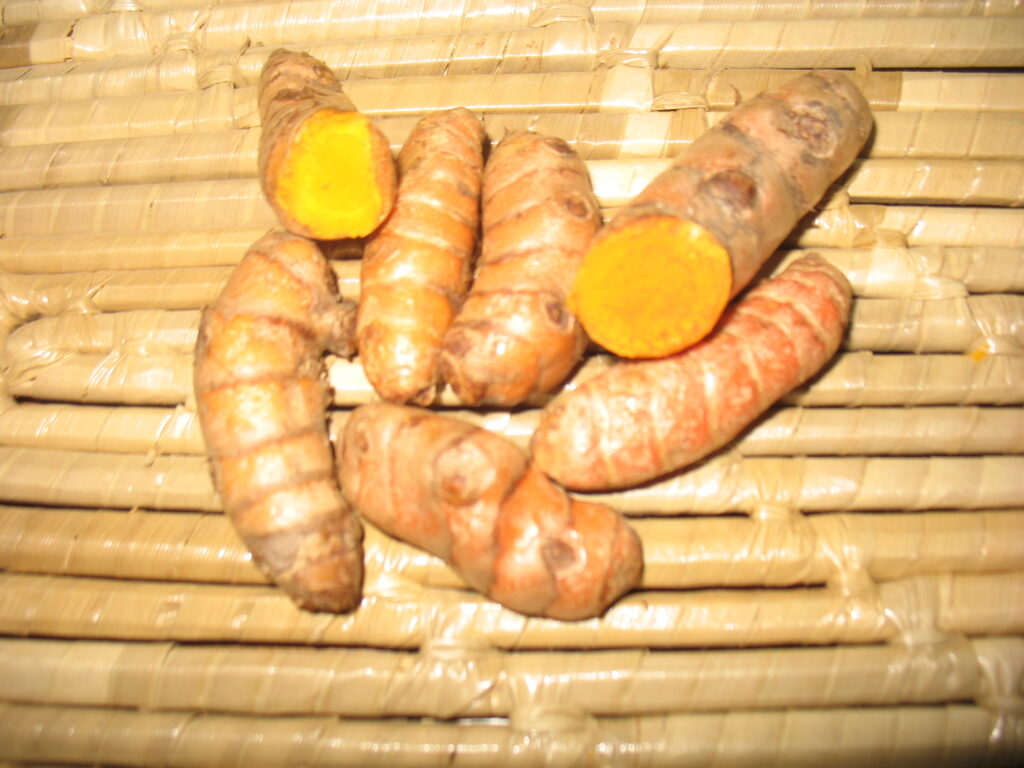
Turmeric is long known for its tremendous health benefits, and we all loudly proclaim its’ value, however, we do not always get the full benefits of the turmeric we consume as we think we do?
Why? Due to the manner in which it is prepared and consumed. Scientists found that Curcumin the chemical in turmeric primarily responsible for its health benefit is not easily absorbed into the body on its own, but is more readily absorbed when the following food preparation strategies are used:
Add Black Pepper.
- When black pepper is added to turmeric the body absorbs up to 2000% of the curcumin absorbed when turmeric is used alone.
- This is due to the piperine in pepper.
- Always sprinkle a little black pepper with turmeric
Use Healthy Fats.
- Curcumin is fat-soluble. Cook with olive oil, coconut oil, or ghee.
- Add to avocado, nut butter, or yogurt for better absorption
Apply Gentle Heat
- Light sautéing or simmering enhances curcumin’s bioavailability
Choose Fresh Root When You Can
- Fresh turmeric contains more oils and antioxidants than dried.
- Grate into teas, smoothies, or stir-fries
Pair with Citrus or Fermented Foods
- Lemon or orange juice (vitamin C) helps stability and absorption
- Fermented turmeric paste or pickles may boost bioavailability
Take it regularly Small daily amounts are more effective than occasional big doses.
Ionie Ponde, MS, RD, LDN
B Food Savvy 
References:
- G Shoba, D Joy, T Joseph, M Majeed, R Rajendran, P S Srinivas, May, 1998, The Influence of Piperine on the pharmacokinetics of Curcumin in animals and Human volunteers, Plant Med, PMID: 9619120, DOI: 10.1055/s-2006-957450.
- panelJunyi Zhao, Wei Jia, Rong Zhang, Xin Wang, Li Zhang, November 2024, Improving curcumin bioavailability: Targeted delivery of curcumin and loading systems in intestinal inflammation, Food Research International, https://doi.org/10.1016/j.foodres.2024.115079Get rights and content
- Biji T Kurien, R Hal Scofield, June 19th, 2020, Increasing aqueous solubility of curcumin for improving bioavailability, Trends Pharmacol Sci, 10;30(7):334–335, PMCID: PMC7304285 NIHMSID: NIHMS1597200 PMID: 19523694
- Shiyou Li, , Wei Yuan, Guangrui Deng, Ping Wang, Peiying Yang, Stephen F Austin State University, Arthur Temple College of Forestry and Agriculture, lis@sfasu.edu, Chemical composition and product quality control of turmeric (Curcuma longa L.), SFA ScholarWorks, https://scholarworks.sfasu.edu/agriculture_facultypubs
- Purusotam Basnet, Natasa Skalko-Basnet, June 3rd 2011, Curcumin: An Anti-Inflammatory Molecule from a Curry Spice on the Path to Cancer Treatment, Molecules, https://doi.org/10.3390/molecules16064567
- Rahul Vinayak Salve1, Ramesh Chavan1, Prashant Pawase2, Nilesh Kelapure3, Rameshwar Jaju3, Harshal Wadatkar, Mahesh Kadam3, November 6yh, 2023, The Impact of the Fermentation Process on Bioactive Compounds in Turmeric: A Review, Journal of Food Chemistry and Nanotechnology, https://doi.org/10.17756/jfcn.2023-s1-046