
When it comes to dinner service, glassware is more than decoration. The right glass not only enhances the look of the table but also improves the taste, aroma, and enjoyment of the drink it holds. Each shape and size has a purpose, whether to preserve bubbles, concentrate aromas, or maintain temperature. “There is a glass made specially for everything we drink”
For a simple fine dining experience, the table is generally set with 2 or 3 types of glasses, the water goblet, the wine glass and the dessert wine glass if needed. It may be zero or more depending on the number of wines served if wine is served at all.
Below, we explore the most common types of glasses used during dinner service, their unique functions, and a few insider tips for setting them properly.
Water Glass
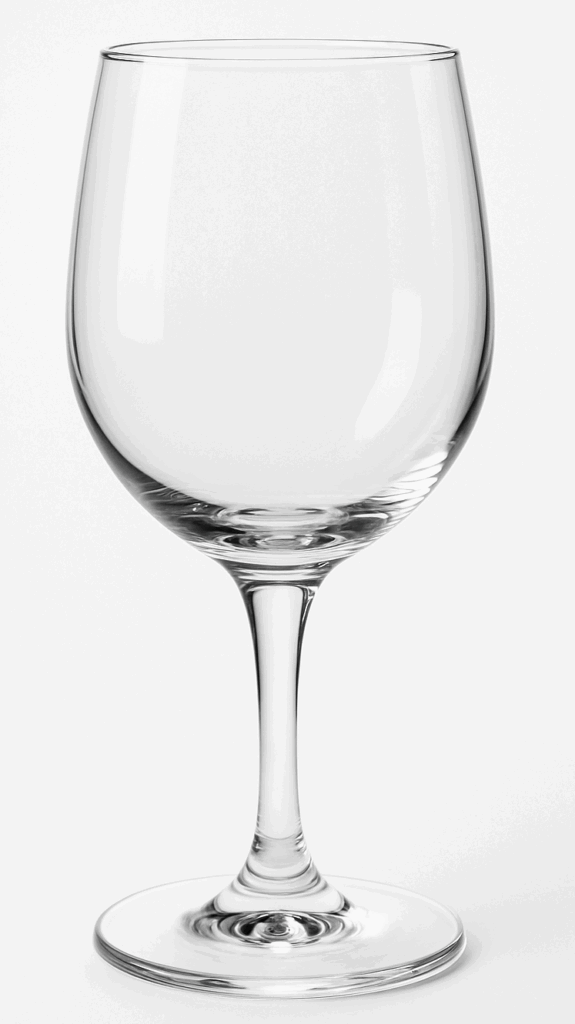
The water glass, also known as the water goblet, is typically the largest glass at the table and the one placed directly above the dinner knife, nearest to your hand. Its wide bowl allows for easy sipping, and the stem helps prevent fingerprints on the bowl or warming from your hand.
Purpose:
To serve water throughout the meal. Water “refreshes the palate and cleanses the taste buds. Especially important for highly seasoned or spicy meals. It is always used for formal dining, but optional for informal dining.
Fun fact: In fine dining, water glasses are often filled before guests are seated and refilled quietly throughout service.
Wine Glasses
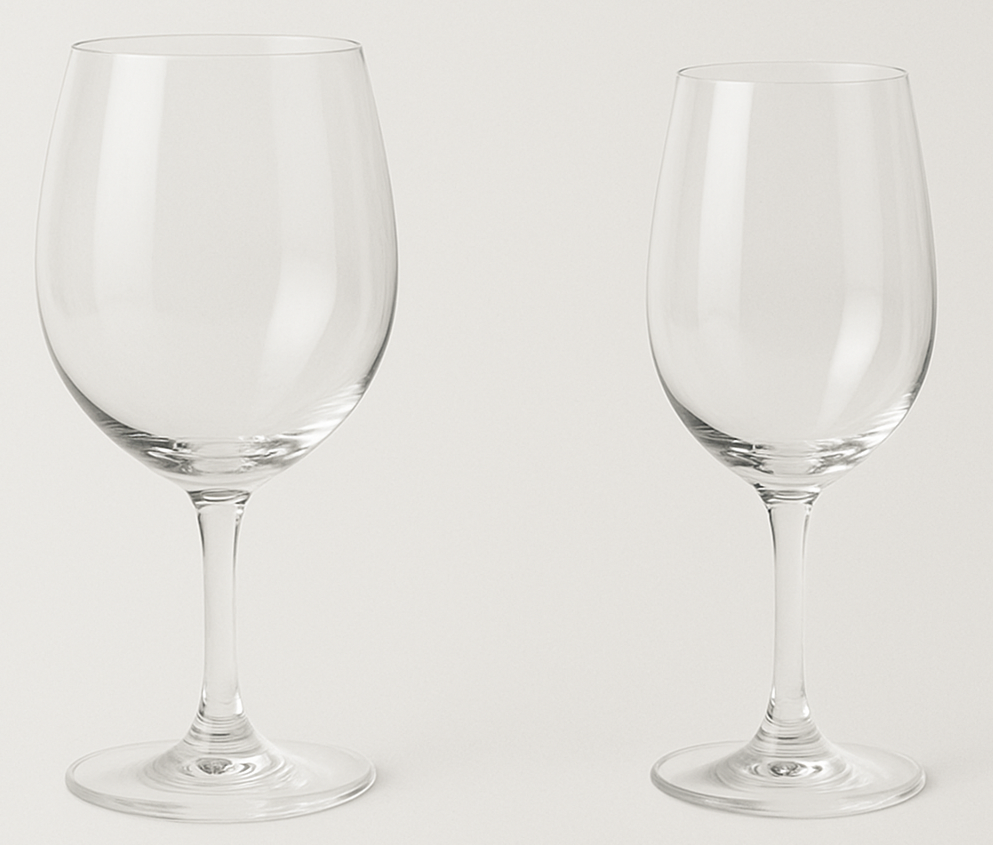
According to Hugh Johnson in his book Wine, “ a good wine glass is a big one, clear, uncoloured, preferably with a stem and a round or roundish bowl, cupping in towards the top to embrace the wine’s bouquet. A glass like this is perfect for any wine, French or German, Californian or Chilean, red or white, still or sparkling. Different wine glasses for different wines can be a pretty sight, but as far as wine is concerned there is no need for them. A glass that is good for one wine is good for all wines”, and so there is the all – purpose wine glass that is used for all wines.
Nevertheless there are wine glasses designed specifically for different types of wine with a different purpose. Whether you choose an all-purpose wine glass or a collection of special wine glasses is your personal decision. Below is a description of the wine glasses usually used in fine dining and their purpose.
Red Wine Glass
Red wine glasses have larger, rounder bowls that exposes the wine to the air around it, allowing the oxygen in the air to interact with the plant chemicals in the wine, releasing the aromas, adding to its enjoyment.
Purpose:
To enhance the aroma and flavor of red wines such as Cabernet Sauvignon, Merlot, or Pinot Noir.
Design Tip:
There are generally three types of red wine glasses
The Bordeaux or claret glass designed for the redwines produced in the Bordeaux region of France, it is tall with a narrower bowl, ideal for bold reds.
The Burgundy glass is slightly larger than the Bordeaux glass with a wider, balloon-shaped bowl, perfect for delicate reds like Pinot Noir and is available in two sizes, one much larger than the standard size.
The All- Purpose Wine Glass, called the Paris Glass, possibly due to its wide use in Paris for both red and white wines is used for all wines.
White Wine Glass
The white wine glass is slightly smaller with straighter sides than the red wine glass. This design helps preserve cooler temperatures and concentrates the delicate aromas of white wines.
Purpose:
To keep white wines crisp and aromatic.
Examples:
Ideal for Chardonnay, Sauvignon Blanc, and Pinot Gris.
Champagne or Sparkling Wine Glass
When it’s time to toast, reach for a champagne glass. These come in several forms:
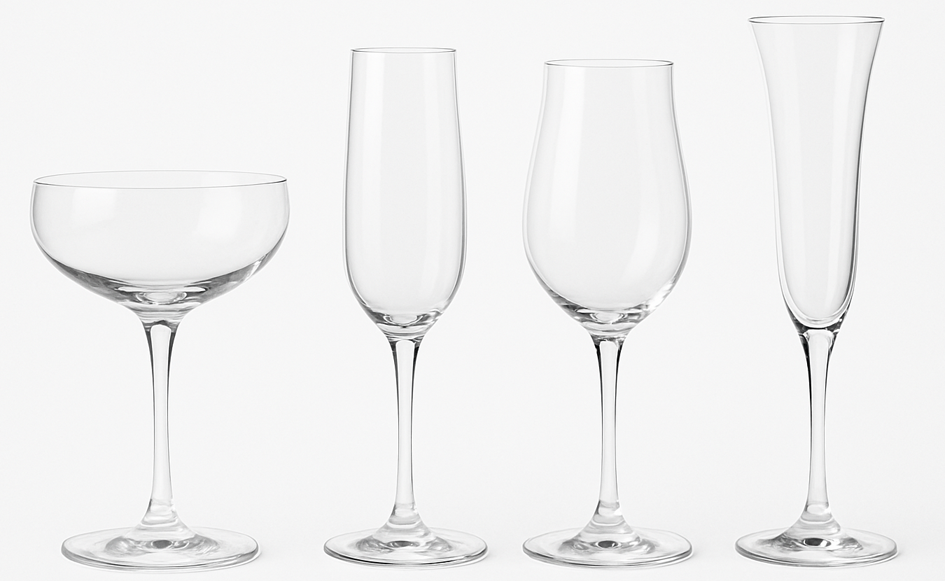
Left to right: Champagne Coup/Champagne Flute/Champagne Tulip/Champagne Trumpet
Coupe: A wide, shallow bowl that is elegant in appearance, but allows bubbles to dissipate faster and does not concentrate the aroma. It is not recommended by connoisseurs.
Flute and Trumpet: Tall and narrow to allow the slow rise of bubbles to the rim prolonging effervescence (fizz).
Tulip: Slightly curved inward at the rim to balance aroma and bubbles. It is preferred by wine connoisseurs
Aperitif / Cocktail / Martini Glass
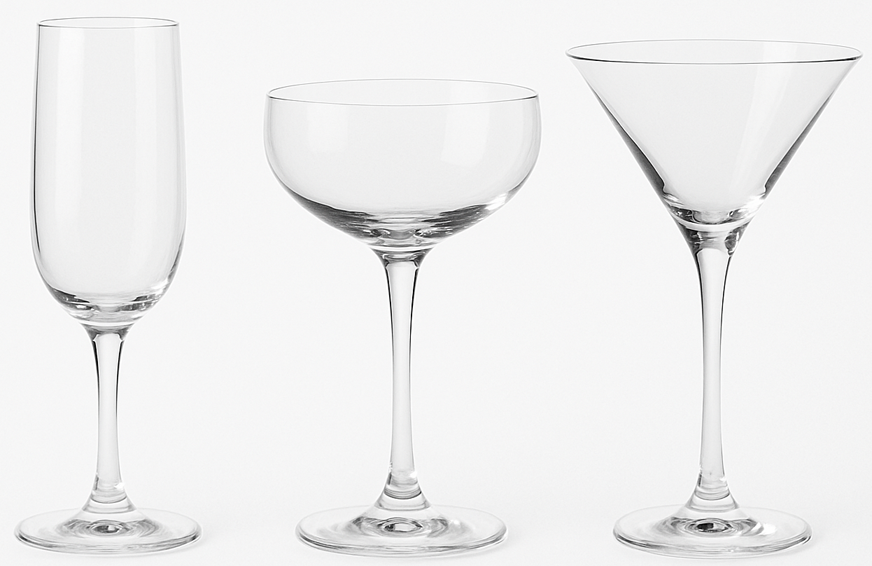
Left to right: Aperitif Glass/Cocktail Glass/Martini Glass.
Function / Purpose
A small glass for pre-dinner drinks or aperitif or cocktail that serves to stimulate the appetite and start the gastric juices flowing such as Dubonnet, Campari, sherry etc.
These are usually served without ice, so the shape emphasizes aroma and sipping.
They are usually not placed on the table.
Design Notes
They vary widely in shape and can be a stemmed glass or a small tumbler. Holding them by the stem keeps the body’s heat from warming the drink.
Dessert Wine / Fortified Wine / Liqueur Glass
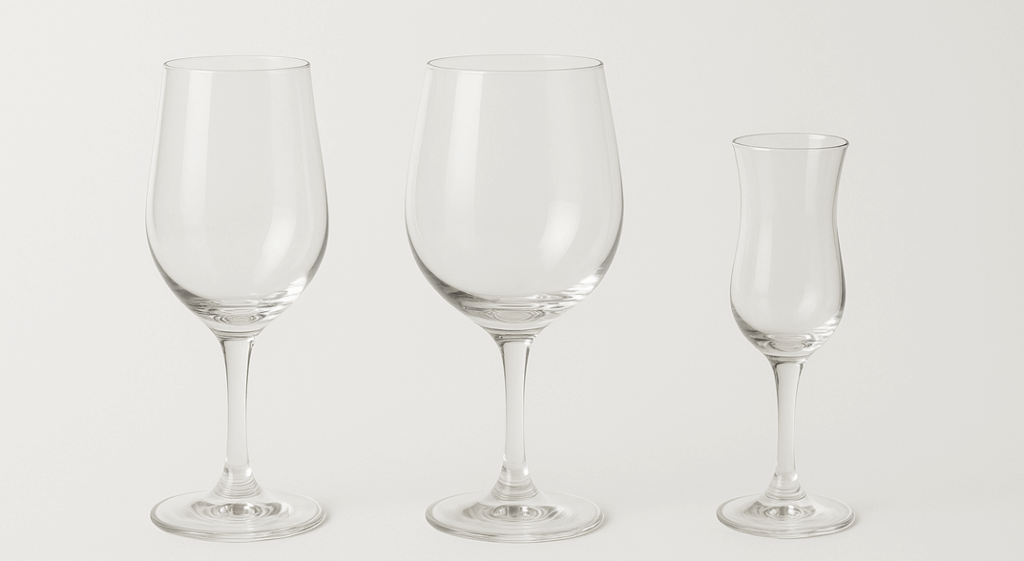
Function / Purpose
For sweet wines; sherry, port, Sauternes, etc., dessert liqueurs, or after-dinner fortified wines.
These wines are generally high in alcohol content and served in smaller quantities.
Design Notes
The bowls tend to be narrower and smaller so that the aromas are concentrated and the serving size is controlled.
Some may be stemmed or stemless depending on formality or personal preference
Tumbler / Highball, Lowball / Rocks Glass (for non-wine drinks)
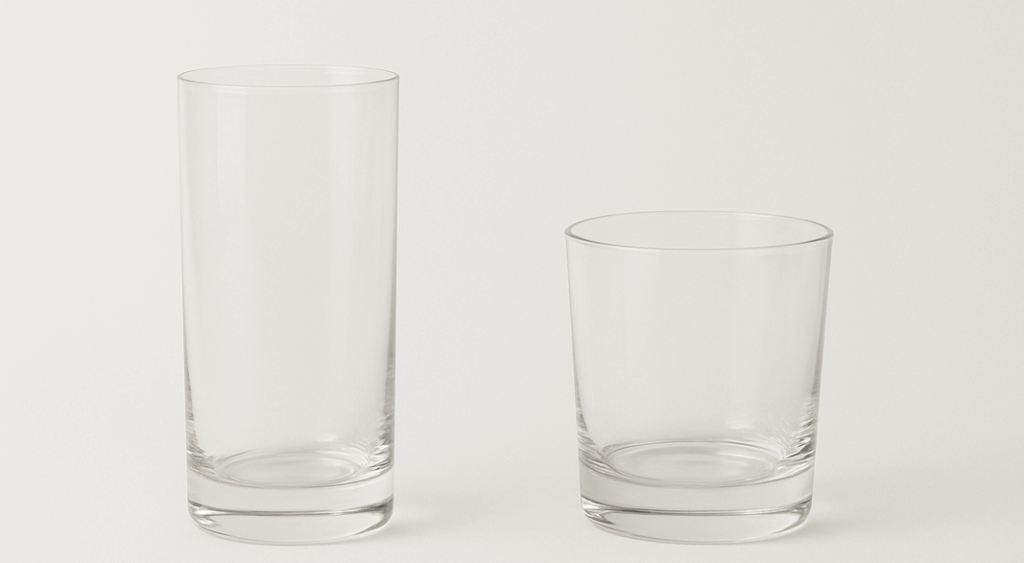
Although the stemmed glass is the glass of choice for formal dinners, the tumbler can be used for less formal dinners to serve non-alcoholic beverages such as water, juice soda etc., They are tall cylindrical glasses with a solid stemless base. Also called high ball glasses.
The shorter version, the low-ball glass, also called rock glass or old fashion glass is used for serving alcoholic drinks with ice such as cocktails or old fashion.
There is also a tumbler style wine glasses.
Why Glass Shape Matters
Aroma: The bowl’s shape directs the wine’s bouquet toward the nose which unites with the taste to maximize the flavor.
Temperature: Stems reduce hand contact with the bowl, keeping drinks cooler.
Carbonation: Narrow shapes preserve bubbles in sparkling wines as they rise and dissipate more slowly.
Presentation: Coordinated/matching glassware adds elegance and flow to the table setting.
Arranging Glassware for Dinner Service
In a formal setting, glassware is placed above the knives on the right side of the place setting in the order of use with the Goblet nearest to the hand and the wine glasses to the right of the of the water goblet. The wine glasses are arranged right of the water glass with the first to be used at the far right, followed by the next to be used and the next, with the last one to be used nearest to the water glass. When 3 glasses are used, to conserve space, they can be arranged in the form of a triangle with the dessert glass at the highest point and the water glass on the left base and the wine glass on the right base. If there are 4 glasses they can be are arranged in the form of a diamond.
Below is a photo of the triangular wine glass arrangement
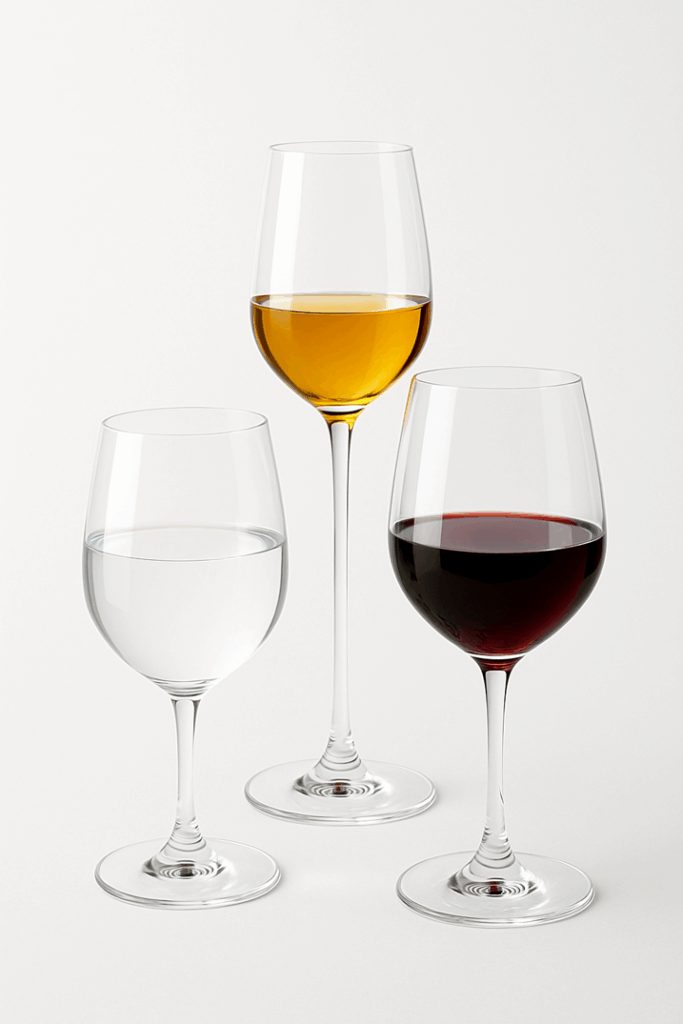
Glasses can also be arranged in a diagonal line from left to right depending on space.
- Water goblet
- Champagne or dessert glass
- Red wine glass
- White wine glass
If cocktails or aperitifs are served, those glasses are usually presented and cleared before the first course.
To wrap up
The best glasses to use for your fine dining experience is your personal preference. “If the glass is yours, use it”. However traditionally matching stemware is used for formal dining and can light up your table on a simple fine dining experience. They add elegance to the table setting.
You can opt for the all-purpose wine glass or the ones designed for specific wines or the tumbler instead of the stemmed glassware as you please.
The number of glasses and sequence depends on the formality, the menu and the number and type of wines to be used, if wine is used at all. Wine glasses can be used for “pretend wine”, carbonated fruit juice.
Glasses are arranged on the table logically in the order of use, starting with the water goblet nearest to the hand, and the wine glasses following the sequence above.
Whether you are dining out or dining in, paying attention to the glassware will facilitate and elevate your dining experience.
Ionie Ponde, MS, RS,LDN
B Food Savvy 
References
- Suzanne Von Drachenfels, The Art of The Table, Simon ands Schuster, N.Y, N.Y, 2000
- Hugh Johnson, Wine, Simon and Schuster, N.Y, N.Y, 1969
- Patricia Easterbrook Roberts, Table Settings, Entertaining and Etiquette, A History and Guide, The Viking Press New York, 1968