The Naturally Sweet Superfood Packed with Nutrition
Sweet potatoes are more than a comforting side dish, they’re a nutrient-dense powerhouse that supports overall health from head to toe. Naturally sweet, versatile, and rich in vitamins, minerals, and antioxidants, sweet potatoes deserve a regular place on your plate.
Whether baked, roasted, mashed, or blended into soups, sweet potatoes deliver both flavor and functional nutrition with every bite.
1. Rich in Essential Nutrients
Sweet potatoes are loaded with vitamins and minerals that help your body function at its best.
Sweet potato provides:
- Vitamin A (as beta-carotene) – supports vision and immunity
- Vitamin C – boosts immune health and collagen production
- Vitamin B6 – aids cognitive development and Protein metabolism Source
- Potassium – supports heart health and muscle function
- Manganese – helps with bone health and antioxidant defenses
Few foods provide as much vitamin A in one serving as sweet potatoes.
2. Powerful Antioxidant Protection
The vibrant orange, purple, and yellow colors of sweet potatoes come from antioxidants that protect cells from oxidative stress.
- Beta-carotene converts to vitamin A and supports eye health
- Anthocyanins (found in purple sweet potatoes) may help reduce inflammation
- Antioxidants help lower the risk of chronic diseases linked to aging associated with a lower risk of diabetes, cardiovascular disease, and cancer, and has also been associated with improved cognitive function. The deeper the color, the higher the antioxidant content.
3. Supports Gut Health & Digestion
Sweet potatoes are rich in dietary fiber, which:
- Feeds beneficial gut bacteria
- Helps prevent constipation
- Supports a healthy microbiome
They also contain resistant starch, especially when cooked and cooled, which further benefits gut health.
4. Helps Regulate Blood Sugar
Despite their sweetness, sweet potatoes have a lower glycemic impact, causing a lower and smaller rise in blood sugar than many refined carbohydrates.
Why they’re blood-sugar friendly:
Fiber slows glucose absorption
Complex carbohydrates provide steady energy
They may improve insulin sensitivity when eaten in moderation
Preparation matters: baking or boiling is gentler on blood sugar than frying.
5. Supports Heart Health
Sweet potatoes contribute to cardiovascular wellness by:
- Providing potassium to help regulate blood pressure
- Supplying fiber that may help lower LDL cholesterol
- Delivering antioxidants that reduce inflammation
A heart-smart carb that doesn’t sacrifice flavor.
6. Naturally Gluten-Free & Anti-Inflammatory
Sweet potatoes are:
- Gluten-free
- Easy to digest
- Suitable for many anti-inflammatory eating patterns
They’re an excellent choice for people with gluten sensitivities or those seeking whole-food carbohydrates.
7. Versatile, Affordable, and Delicious
Sweet potatoes shine in both savory and sweet dishes:
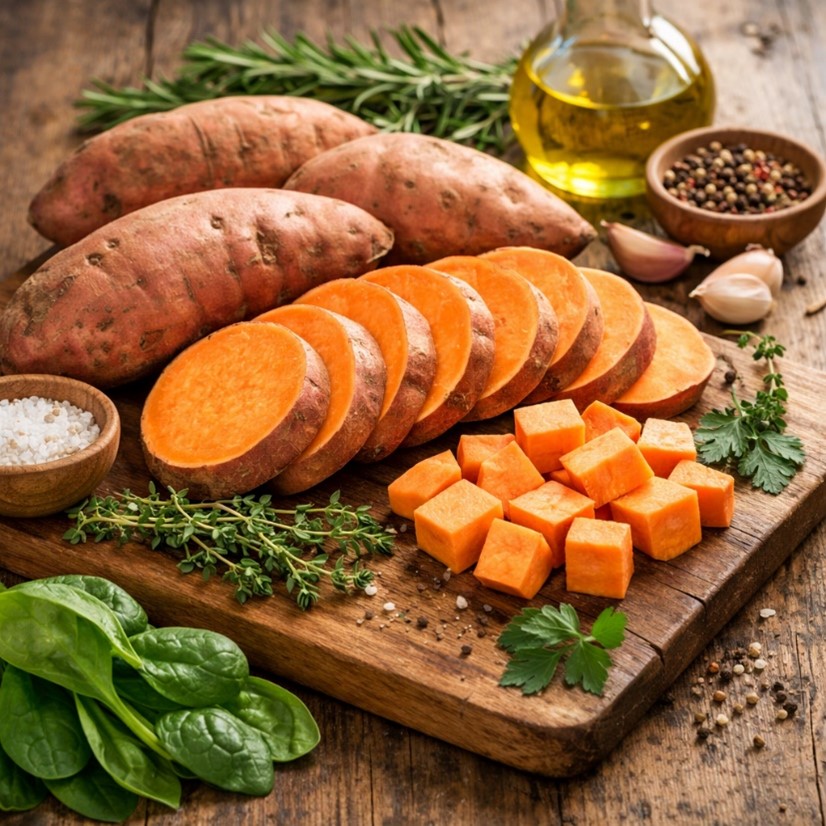
- Roasted with olive oil and herbs
- Mashed as a nutrient-rich alternative to white potatoes
- Cubed into salads and grain bowls
- Blended into soups, stews, and even baked goods
They’re budget-friendly, widely available, and easy to store.
Sweet potatoes are a nutritional all-star, a Smart Choice for Everyday Eating, supporting immune health, digestion, heart health, and balanced energy levels. Their natural sweetness, vibrant color, and versatility make them easy to love and even easier to include in meals year-round.
If you’re looking for a wholesome food that delivers both comfort and health benefits, sweet potatoes are an excellent choice.
Ionie Ponde, NS, RD, LDN
B Food Savvy 
References
- Us Department of Agriculture, Food Data Central, https://fdc.nal.usda.gov/food-details/2346404/nutrients
- National Institute of Health Office of Dietary Supplements https://ods.od.nih.gov/factsheets/list-all/
- Panel Flora Christine Amagloh, Archileo N. Kaaya, Benard Yada Doreen Murenju Chelangat, Arnold Katungisa, Francis Kweku Amagloh, Gaston Ampe Tumuhimbise, Bioactive compounds and antioxidant activities in peeled and unpeeled sweet potato roots of different varieties and clones in Uganda, Future Foods Volume 6, December 2022, 100183, https://doi.org/10.1016/j.fufo.2022.100183
- Emily P Laveriano-Santos, Anallely López-Yerena, Carolina Jaime-Rodríguez, Johana González-Coria, Rosa M Lamuela-Raventós, Anna Vallverdú-Queralt, Joan Romanyà, Maria Pérez, August 22nd, 2025, Sweet Potato Is Not Simply an Abundant Food Crop: A Comprehensive Review of Its Phytochemical Constituents, Biological Activities, and the Effects of Processing, Antioxidants, PMCID: PMC9495970 PMID: 36139723
- Peter Cronin, Susan A. Joyce, Paul W. O’Toole and Eibhlís M. O’Connor, May 13th, 2021, Dietary Fibre Modulates the Gut Microbiota, NUTRIENTS, https://doi.org/10.3390/nu13051655
- The John Hopkins Patient Guide to Diabetes, hopkinsdiabetesinfo@jhmi.edu
- Glycemic Index Food Guide, Canada, https://www.diabetes.ca/DiabetesCanadaWebsite/media/Managing-My-Diabetes/Tools%20and%20Resources/glycemic-index-food-guide.pdf?ext=.pdfhttps://www.diabetes.ca/DiabetesCanadaWebsite/media/Managing-My-Diabetes/Tools%20and%20Resources/glycemic-index-food-guide.pdf?ext=.pdf
- Mark D Haub, December 15th, 2010, Effects of Dietary Fiber and Its Components on Metabolic Health, Nutrients, PMCID: PMC3257631 PMID: 22254008
- Thomas M Barber, Stefan Kabisch, Andreas F H Pfeiffer, Martin O Weickert, October 21, 2020, The Health Benefits of Dietary Fibre, Nutrients, PMCID: PMC7589116 PMID: 33096647
- Sources of Gluten, Celiac Foundation Advocacy Breakthrough Cure, https://celiac.org/gluten-free-living/what-is-gluten/sources-of-gluten/#:~:text=Gluten%2DContaining%20Grains%20and%20Their,stuffings%2C%20dressings